en
 русский
 Español
 عربى

Content
- 1 What Emotional Support Plush Toys Actually Do
- 2 The Details That Decide Whether a Plush Becomes a Companion
- 3 A Comfort Feature Checklist
- 4 Choosing the Right One for the Person Who Needs It
- 5 Safety, Testing, and the Quiet Work Behind Softness
- 6 Comfort Beyond the Bedroom
- 7 What We've Learned as a Maker
There is a certain kind of quiet that settles in when someone picks up a plush toy they trust. Shoulders drop. Breathing slows. A hard day feels a little more manageable. That is the whole idea behind emotional support plush toys: soft companions chosen less for how they look on a shelf and more for how they feel in your arms at two in the morning.
We have been designing and manufacturing plush toys since 2013, and over that time the category has changed shape. Comfort plush used to live in nurseries. Today it sits on office desks, in university dorm rooms, in hospital bags and on the sofas of grown adults who simply sleep better with something soft nearby. This guide covers what makes those toys work, how to choose one for yourself or someone else, and what buyers should know before sourcing them in volume.
What Emotional Support Plush Toys Actually Do
An emotional support plush toy is not a treatment and it is not a medical device. It is something simpler and older than that: a familiar object that gives the nervous system a place to rest. When you hold it, your hands have something to do, your senses have something to notice, and your thoughts have a little less room to spiral.
- Tactile anchoring. Texture gives the brain something concrete to focus on when everything else feels loud.
- Routine and ritual. The same toy in the same place at bedtime becomes a signal that the day is ending.
- Permission to rest. Adults often find it easier to slow down with something soft in their hands, because the object makes the need visible.
- A place for feelings. Children act out fear, anger and comfort through plush toys long before they can name those feelings out loud.
Therapists, sleep coaches and child development specialists all work with these ideas. What we can speak to, as makers, is the physical side of it: the fabric, the fill, the weight and the stitching that decide whether a toy becomes a companion or stays in a drawer.
The Details That Decide Whether a Plush Becomes a Companion
Fabric and Fill
Hand feel is the first thing anyone notices. Short-pile velboa and minky are the workhorses of comfort plush: smooth, hard-wearing, and unlikely to mat down after weeks of nightly hugging. Longer pile fleece feels more indulgent but needs gentler care. Inside, a good toy uses evenly distributed, hypoallergenic polyester fiberfill, packed firmly enough that the shape springs back after a squeeze, but never so tightly that it feels stiff.
Weight and Size
Sizing should follow use. A plush that lives in a backpack wants to be 15 to 25 centimetres and light. A bedtime companion usually works best between 30 and 45 centimetres, big enough to wrap both arms around. Some people prefer a heavier toy, in the 300 to 500 gram range, because the extra pressure is grounding. Weighted plush is now a category of its own, and it needs careful engineering so the fill stays balanced and age-appropriate.
Faces and Features
Expression matters more than most people expect. A soft, simple face reads as calm and approachable, while a very detailed one can feel busy. Embroidered eyes and noses are the safer choice for children and the more durable choice for everyone, because there is nothing to loosen over years of use.
Washability and Wear
Comfort items get used, dropped and dragged around, so they have to survive cleaning. Machine washable construction at 30 degrees, reinforced seams and double stitching at stress points are what keep a favourite toy looking like itself. Those are engineering decisions made long before the toy reaches anyone's hands.
A Comfort Feature Checklist
| Feature | What to look for | Why it matters |
|---|---|---|
| Fabric | Short-pile velboa, minky or brushed knit | Soft on skin and easy to keep clean |
| Fill | Evenly packed, hypoallergenic polyester | Holds shape through squeezing and washing |
| Weight | 150 to 400 grams for handheld plush | Gives gentle pressure without feeling heavy |
| Size | 20 to 35 cm to carry, 45 cm and up for beds | Matches how and where it will be used |
| Face details | Embroidered or securely attached features | Nothing works loose over years of handling |
| Care | Machine washable at 30 degrees, air dry | Comfort items need frequent cleaning |
| Safety marks | EN 71, ASTM F963, CPSIA or ISO 8124 | Confirms age grading and material testing |
Choosing the Right One for the Person Who Needs It
There is no single best emotional support plush toy, only the right match. Here is how we think about it when friends and customers ask.
- For a baby or toddler, look for a small comforter with knotted corners, no loose parts, and a clear baby-safe label.
- For a school-age child, a mid-size animal in a washable fabric handles playgrounds, car journeys and bedtime alike.
- For a teenager, character-driven designs, blind boxes and plush keychains fit the way comfort travels between school, friends and home.
- For an adult, larger and denser toys work well, especially ones that double as a reading pillow or a desk companion.
- For someone with sensory sensitivities, choose short-pile fabric, fragrance-free fill and smooth, low-profile seams.
- For a gift, a classic animal in a neutral colour is the safest choice, and it never hurts to ask which animal the person already loves.
Baby-safe comforters deserve a special mention, because the youngest users need the gentlest construction of all. Soft knitted fabric, secure knots and a shape that small hands can grip matter far more than decoration.
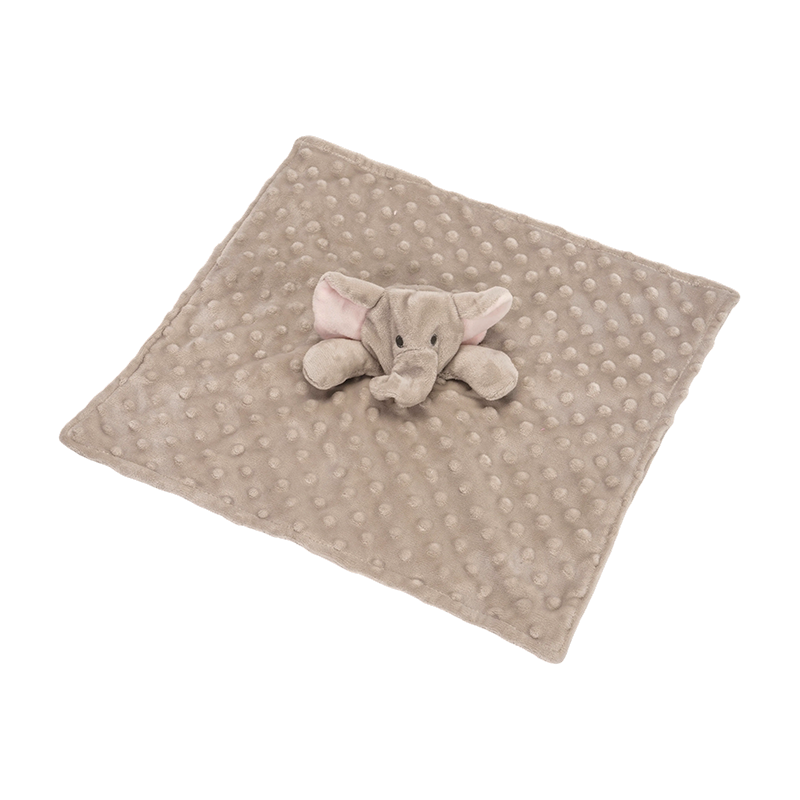 Baby-Safe Elephant-Head Comfort Blanket for Calm SleepA baby-safe plush comforter with soft, breathable fabric and an elephant-head detail, suited for wrapping or as a sleep companion.View Product →
Safety, Testing, and the Quiet Work Behind Softness
Every plush toy we make is built to the safety standards of the market it ships to: EN 71 for Europe, ASTM F963 and CPSIA for the United States, and ISO 8124 or the equivalent national rules for Australia, Japan and Korea. In practice that means restricted substances controlled, hypoallergenic fill, attachment testing on eyes and noses, and age grading that tells a parent honestly whether a toy suits a child under three.
Safety also shows up in less visible ways. Thread ends are trimmed and sealed inside the seams. Weighted inserts are enclosed in a second lining so they cannot escape. Packaging is tested too, because a toy that is fine in a warehouse can still be a hazard in a home.
Comfort Beyond the Bedroom
Emotional support does not end at the bed. Travel is one of the most common places people reach for something soft, and a shaped neck pillow turns a cramped flight or a long bus ride into something closer to rest. That is why we keep a full range of plush travel pillows in animal shapes, sized to support the neck while staying soft enough to hug.
At home, throw pillows and cushions do similar work for adults who would rather not explain why they keep a soft toy on the sofa. A smiling cat cushion, a chubby penguin pillow or a classic bear shape reads as home decor first and comfort object second, which many people find much easier to live with.
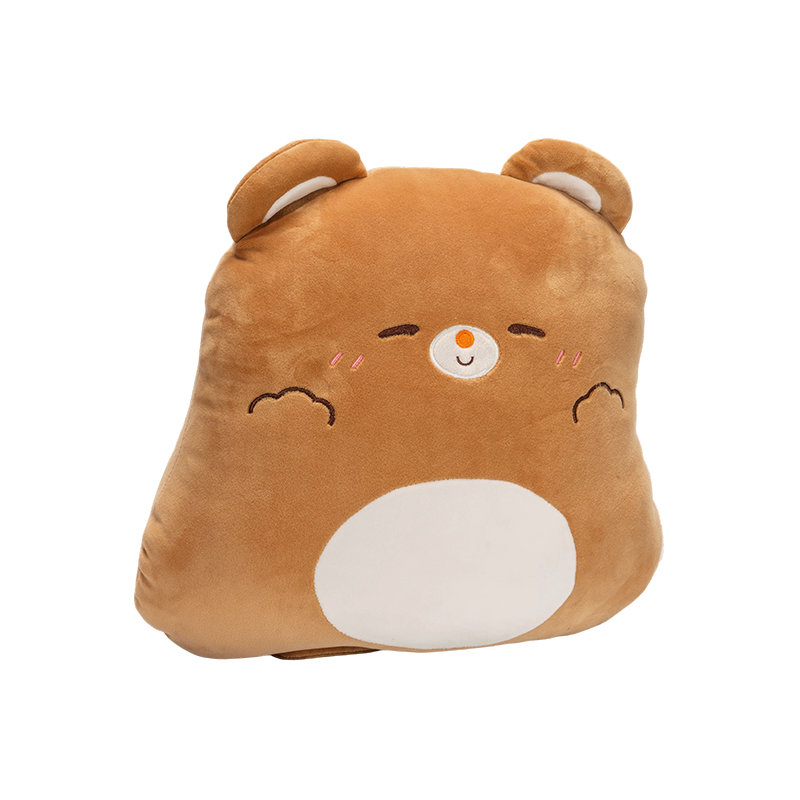 Brown Bear Plush Throw Pillow for Cozy HomesA chubby brown bear pillow with soft plush and PP cotton fill, styled as cute home decor and a comforting sofa accent.View Product →
What We've Learned as a Maker
Our company started in 2013 in Jinji Town, Anhui Province, with a factory of more than 10,000 square metres and a simple brief: make plush that people genuinely want to hold. Today our toys ship to Europe, North America, Australia, Japan and Korea, and the range stretches from baby-safe comforters to designer trend plush, holiday characters, home textiles and promotional pieces.
The commercial lesson is that comfort sells in many forms. Over the past few years the category has moved well beyond the classic teddy bear into collectible designer figures, blind boxes, plant-shaped plush, plush stationery and pet toys, a shift we have explored in our article on the cultural upgrade in plush manufacturing. What stays constant is the standard: soft, safe, well stitched, and honest about what it is.
For brands and retailers, that means working as a partner rather than a catalogue. Sampling, custom sizes, licensed character work, in-stock programs for fast seasonal windows: all of it starts with a conversation about who will hold the toy and when.
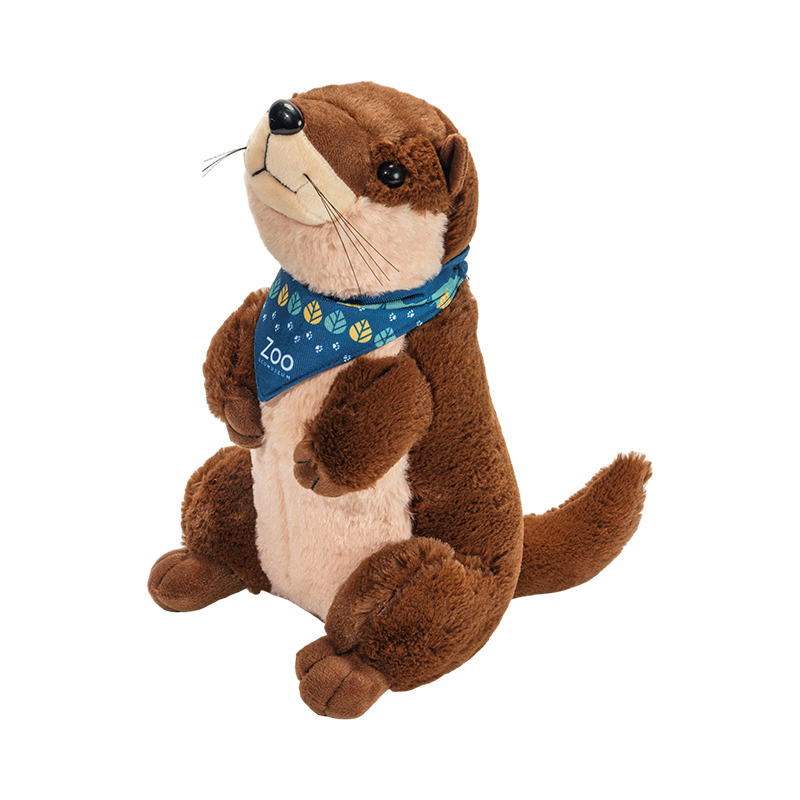 Sitting Plush Otter Toy with Blue Floral ScarfA soft brown sitting otter with a blue floral scarf; a comforting wild-animal plush for cuddling or custom retail programs.View Product →
If you are choosing an emotional support plush toy for yourself, trust your hands over the marketing. Pick it up, squeeze it, and notice whether your breathing changes. The right one usually makes itself obvious within a minute.
If you are choosing for someone else, ask what they loved as a child, or simply hand them a few options and watch. And if you are a buyer looking for a manufacturing partner who understands why a seam allowance or a gram of fill matters, we are always glad to talk through the details.