en
en  русский
 Español
 عربى
عربى
Walking into a baby shop with a newborn checklist in hand, most parents quickly realise that the "cuddly toy" section is bigger than it looks. There are bears, bunnies, comfort blankets, knitted animals and plush dolls, all promising to be a great first soft companion. The truth is simpler than the shelves suggest. A good cuddly toy for a newborn does not need to be elaborate or expensive; it needs to be safe, washable, and soft enough to be comforting. Once you know what to check, choosing one takes about five minutes.
What to Look for in a Cuddly Toy for a Newborn
Start with the physical details, because they decide everything else. A newborn experiences a toy through skin and mouth long before playing with it, so every part of the toy must survive close contact. When you pick up a possible toy, run through this checklist:
- Soft, breathable fabric: short-pile plush, knitted cotton, or muslin are gentle on sensitive skin and allow air to circulate.
- Embroidered face details: eyes and noses should be stitched, never glued or made from hard plastic.
- No small trims: buttons, ribbons, and loose tags can detach and become a choking hazard.
- Lightweight and compact build: a toy that is easy to hold and does not weigh on a baby's face.
- Machine washable at 30–40 °C: the toy will be washed far more often than you expect.
- Clear newborn or 0+ age labelling: a sign that the toy was designed and tested for young infants.
This list looks obvious, yet it filters out a surprising number of products. Many decorative plush toys are perfectly safe for older children but not suitable for a newborn. The table below summarises what to compare while you browse.
| Check | Newborn-safe choice | Why it matters |
|---|---|---|
| Fabric | Short-pile plush or knitted cotton | Gentle on sensitive skin and breathable |
| Face details | Embroidered eyes and nose | No hard parts that can press into the face |
| Trims and fastenings | Reinforced seams, no buttons or ribbons | Nothing to pull off and swallow |
| Filling | Continuous polyester fibre | Keeps its shape after washing and dries quickly |
| Size | Compact, roughly 20–30 cm | Easy for small hands and less overwhelming |
| Care | Machine washable at 30–40 °C | Stays hygienic with frequent washing |
Every row points in the same direction: fewer parts, softer surfaces, and easier cleaning. A toy that passes these checks can be handed to a baby with far more confidence than one chosen simply because it looks adorable.
Materials and Safety for a Newborn Cuddly Toy
A common mistake parents and buyers make is choosing on looks rather than construction. A cuddly toy for a newborn has to survive chewing, drooling, squeezing, and washing every few days, and it has to do so without shedding fibres or losing pieces. That is a manufacturing question as much as a design question. Toys exported to Europe, North America, and Australia are expected to meet standards such as EN71 in Europe, ASTM F963 in the United States, and the traceability rules of CPSIA. Large retailers ask for these certificates as standard practice, which is one reason why a baby-safe plush toy range tends to come from a factory with serious quality control.
The filling matters just as much as the fabric. Continuous polyester fibre keeps its shape, dries quickly, and does not clump after repeated washing. Small plastic pellets are common in toys for older children but are a poor choice for a newborn: if a seam opens, the pellets become a choking hazard. Glued-on eyes and noses can loosen with heat and moisture, which is why embroidered features are generally the safer choice at this age.
Stitch quality is the part you cannot see on a product photo, but it is the part that keeps a toy safe over time. Reinforced seams, double stitching at stress points, and a final inspection before packing are standard practice for suppliers who sell to regulated markets.
When and How a Newborn Uses a Cuddly Toy
A newborn's idea of play is very different from an older baby's. In the first months, a cuddly toy works mainly as a comfort object: the softness against the cheek, the visible animal face, and the familiar smell that builds up as parents handle it. That changes where and how you use the toy.
- 0–3 months: keep the toy in the stroller, beside the play mat, or held by a parent during feeding. Let the baby feel different textures during supervised awake time.
- 3–6 months: reaching and grasping begin. A flat, lightweight toy with corners or dangling limbs is much easier for those first deliberate grabs.
- 6–12 months: the toy gets squeezed, chewed, and carried around. Check the stitching regularly and replace the toy as soon as it shows signs of wear.
Safe sleep: keep the cot clear
Paediatric guidance, including the recommendations of the American Academy of Pediatrics, advises keeping soft toys, pillows, and loose bedding out of the crib during the first year. A newborn's cuddly toy therefore belongs beside the crib, in the stroller, or on the play mat rather than in the sleep space.
For activities like tummy time, flat knitted comforters are especially practical: they stay where you put them, give tiny fingers a range of textures to explore, and are light enough for a baby to hold without help.
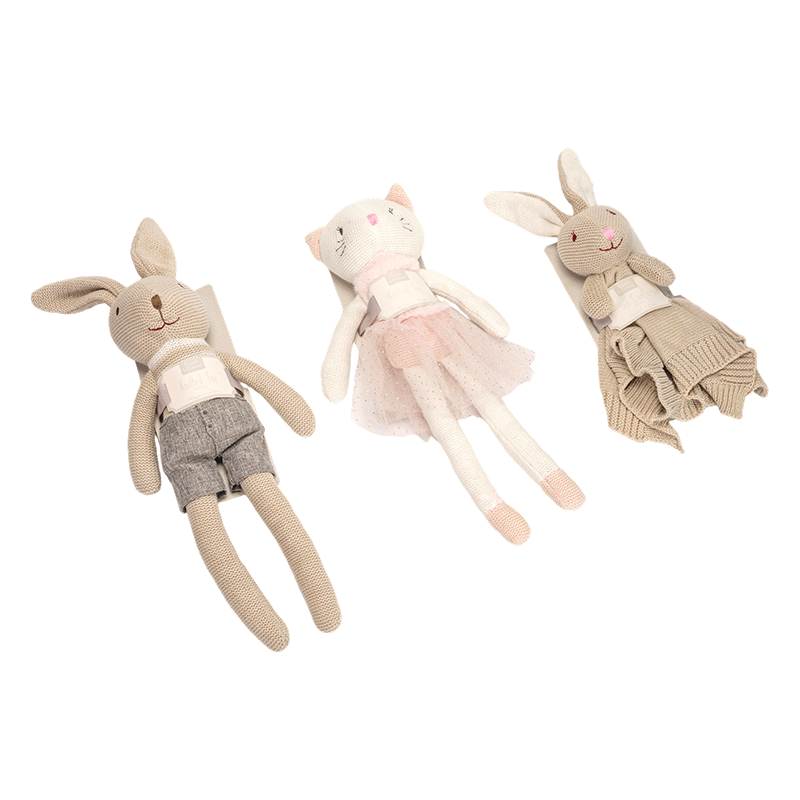 Knitted Baby Animal Comforters with Bunny and Kitty DesignsFlat knitted comforters with bunny and kitty designs, soft and lightweight for tummy time. Made of skin-friendly knitted fabric with durable stitching, ideal as a first sensory toy.View Product →
They are also easier to keep clean than a bulky plush animal, which makes them a sensible first choice for daily use.
Washing and Caring for the Toy
Because the toy will spend a lot of time near a newborn's mouth, washing is not a minor detail. The routine below keeps it fresh and safe:
- Wash before first use to remove any dust or residue from production and handling.
- Machine wash on a gentle cycle at 30–40 °C with a mild, fragrance-free detergent.
- Air-dry or tumble dry on low heat, then shake the toy well to restore the fluff.
- Wash weekly for a toy used every day, and immediately after any visible staining.
One practical trick used by experienced parents and nursery staff is to buy two identical toys. When one is in the wash, the other keeps the baby calm, and you never have to hand over a damp toy at nap time.
Choosing a Newborn Cuddly Toy as a Gift
If you are buying for someone else's baby, use the same safety checklist and add one more consideration: the parents' preferences. Some families want natural fibres and simple designs; others care mainly about easy care and machine washing. A small knitted comforter or a soft blanket-style animal in a neutral colour fits into almost any nursery and rarely disappoints.
This is also where buying from a proper manufacturer shows its value. The baby-safe range at Bestjoy includes soothing blankets, knitted comforters, and play gloves designed for infants, produced in a facility that already supplies plush goods to major retail chains. When a toy comes from that kind of production background, you are not just buying softness; you are buying more confidence in the fabric, the stitching, and the checks behind the product.
An elephant-head comfort blanket, for instance, is a popular first cuddly toy for a newborn. The soft head gives the baby something to nuzzle, while the flat blanket body is easy to grip and simple to fold into a stroller.
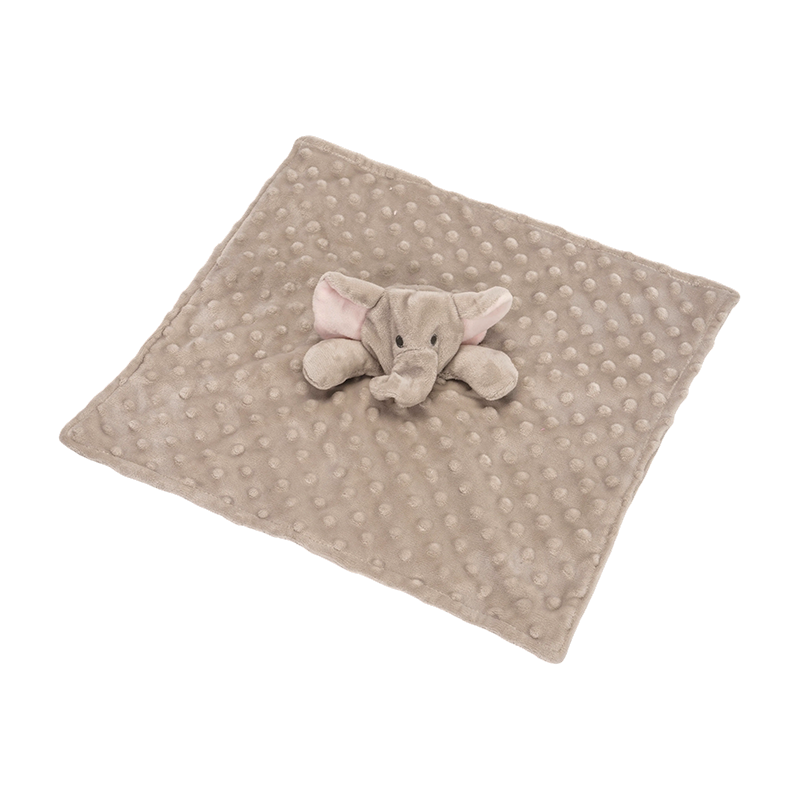 Elephant-Head Baby Comfort Blanket with Ultra-Soft FabricA classic newborn cuddly toy featuring a soft elephant head and flat blanket body, easy to grip and fold. Made of breathable, non-shedding fabric that soothes and comforts.View Product →
For parents who prefer an even simpler shape, a plain baby soothing blanket works the same way without any extra bulk. It is often one of the first toys that a newborn learns to recognise by touch alone.
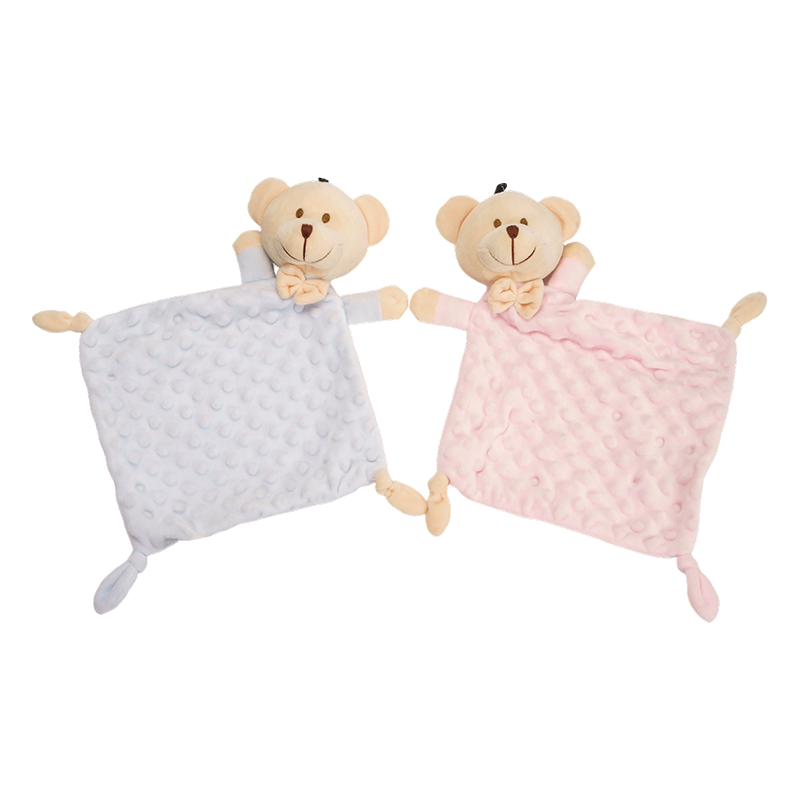 Baby Soothing Blanket with Muted Pink-Gray Plush DesignA simple soothing blanket in soft pink-gray with a cute head, lightweight and easy for babies to grasp. Durable, odor-free fabric supports self-soothing and peaceful sleep.View Product →
If you want the gift to feel more personal, many suppliers now accept small custom details such as a name or a special date embroidered onto the fabric, reflecting how the toy customization industry has grown in recent years. This is a nice touch, but only choose it if the base toy still passes the safety checklist — embroidery should not come at the expense of good construction.
In the end, a great cuddly toy for a newborn is one you do not have to think about twice. It is soft, it cleans well, and it survives the grab-and-chew phase without falling apart. Choose one or two well-made pieces rather than a pile of novelty toys, let them become familiar with use, and they will do exactly what a first soft toy is meant to do: comfort, calm, and stay close through the first years.