en
 русский
 Español
 عربى

A newborn's first plush toy rarely arrives as a big, planned purchase. It is usually a gift passed along with a card, an impulse buy by a grandparent, or a sample chosen by a buyer testing a new baby range. But for anyone who makes that choice professionally, the stakes are higher than sentiment. A soft toy for a newborn must be safe enough for a mouth, gentle enough for sensitive skin, and durable enough for dozens of machine washes — before anyone even thinks about how cute it looks. That is why the most useful way to evaluate newborn plush is not by touch alone, but by construction details.
Safety Starts with Construction, Not Just Softness
For a baby under twelve months, the real risk in a plush toy is not the fabric. It is what can detach from it. Plastic eyes, sewn-on buttons, ribbon bows, and glued noses all become choking hazards the moment a baby grips, tugs, and mouths the toy. Newborn-safe designs avoid these entirely: faces are embroidered or woven into the fabric, and decorative elements are finished as part of the textile surface rather than added on top of it.
Seam quality determines whether the toy stays intact through the hardest test it will face — not rough play, but chewing combined with weekly washing. Double-stitched seams, reinforced limb attachment points, and locked stitching at stress areas are the standard markers of a properly made baby product. When reviewing a supplier's compliance, buyers typically ask for EN71, ASTM F963, and CPSIA documentation, particularly for shipments to Europe, North America, and Australia.
| Checkpoint | Why it matters | What to confirm |
|---|---|---|
| Small parts | Choking risk under age three | Embroidered face, no glued or pinned ornaments |
| Seam strength | Survives tugging, chewing, and washing | Double stitching, locked stress points |
| Fabric | Skin contact and fibre shedding | Short-pile or knitted cotton, low shedding |
| Filling | Shape, breathability, and clumping | Even fill, enclosed inner lining, no harsh lumps |
| Washability | Hygiene over months of use | Gentle machine cycle, quick drying, shape recovery |
Fabric and Filling: What Newborn Skin Actually Touches
The label "soft toys for newborns" suggests one simple texture test, but the materials that suit a baby are chosen for more than feel. Short-pile plush and knitted cotton are common first choices because they shed far less than long, fluffy fabrics and stay smooth after repeated washing. Long fur looks appealing on a shelf, yet it traps dust, pills after washing, and can shed fibres that irritate delicate skin on the face and hands.
Filling is the second decision, and it is often underestimated. Polyester fibre-fill remains the industry standard because it is lightweight, washable, and keeps its shape. For a newborn item, the critical point is that the filling is evenly distributed and contained by a separate inner lining, so it cannot shift into hard clumps or push through the seams. An overstuffed toy may look plump, but it holds heat and is harder for a baby to grip; a moderately filled, breathable body serves an infant better.
Finally, washability should be treated as a health feature, not a convenience. A toy that cannot survive the washing machine will quickly accumulate saliva, milk residue, and dust. Fabrics and fillings that recover their shape after repeated gentle cycles are worth far more than a luxurious surface finish that fades or mats within a few weeks.
One Toy, Three Jobs: Comfort, Sensory Play, and Teething
At this stage, a plush toy functions less as a game and more as a companion. It is a comfort object during sleep and feeding, a sensory surface for exploration, and sometimes a teether. The best designs combine these roles without adding risk.
Comfort and Calming
A palm-sized animal or a light comfort blanket gives a newborn something familiar to hold. Keep the weight low: the toy should be light enough for an infant to push away independently. Weighted or heavily stuffed items have no place in a newborn cot. A soft, flat blanket with a plush animal head attached is one of the most common formats because it covers a larger surface for contact while remaining thin and safe.
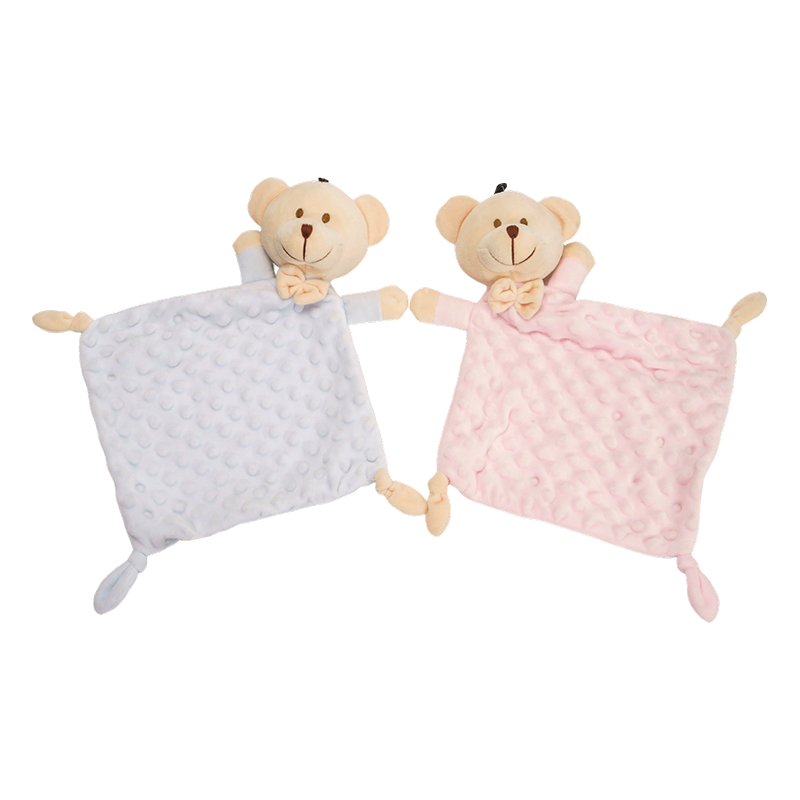 Soft Plush Baby Soothing Blanket with Animal HeadThis lightweight, skin-friendly comforting blanket offers a large soft surface for newborns to grasp and nuzzle, with a cute plush head that fits the soothing companion described in this section.View Product →
Sensory and Tactile Development
Newborns explore with their hands and mouths, which means texture variety is a developmental feature, not a gimmick. Different ears, a softly crinkled patch, or a contrasting tail invite the baby to reach, grasp, and turn the toy over. Knitted surfaces are especially effective at this age because they add a gentle tactile rhythm that many babies find soothing.
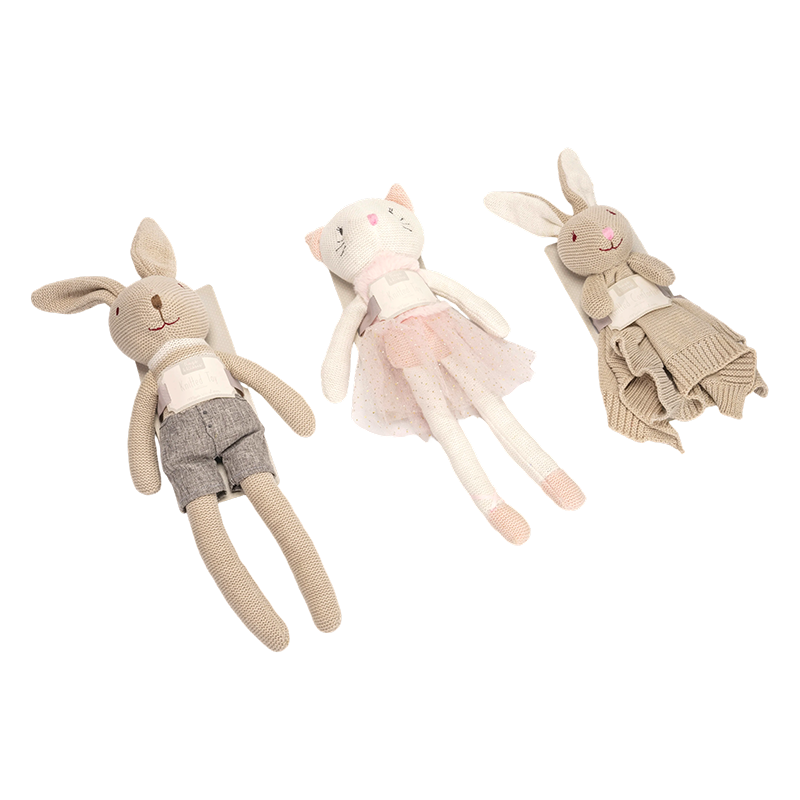 Knitted Baby Animal Comforter with Bunny or Kitty DesignThis bunny or kitty knitted comforter adds varied tactile surfaces that encourage reaching and grasping, while its soft, safe construction supports soothing contact for newborns exploring texture.View Product →
Safe Teething Support
Teething changes how a toy is used. Any plush intended for mouthing must be free of detachable parts, or it needs an integrated teething zone that is sewn directly into the design. A plush glove with a built-in teething surface, for example, keeps the soft, familiar shape while giving the baby a clean, food-safe area to bite. The key is that the teething element cannot be removed, swallowed, or repositioned by the baby.
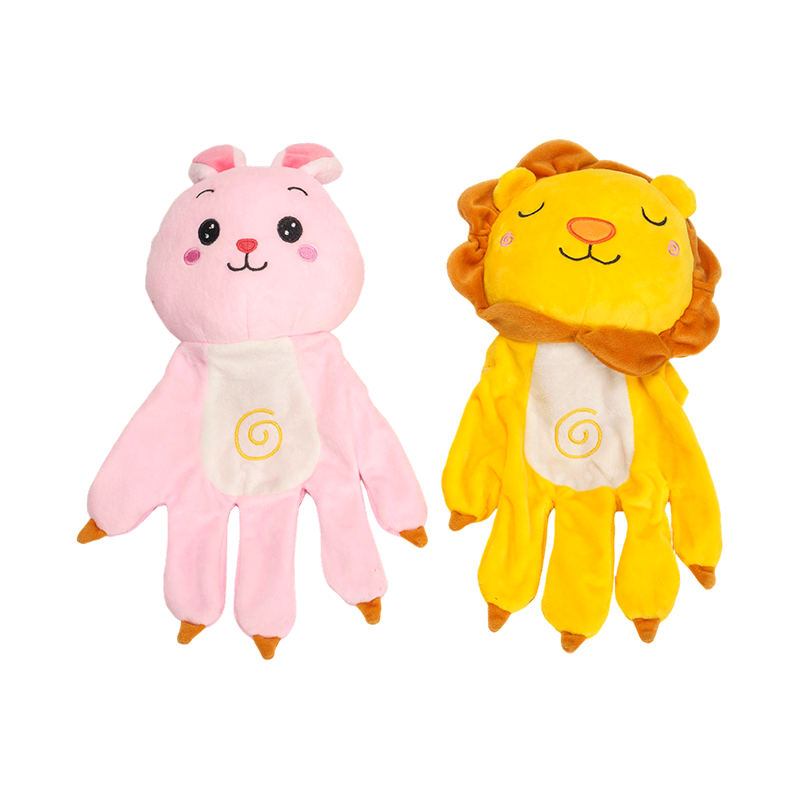 Animal-Shaped Baby Teething Mitten Gloves with Food-Grade Chew ZoneDesigned to relieve teething discomfort and prevent face scratching, these plush gloves include a food-grade, non-detachable chewing surface and meet international baby safety standards, making them a dependable choice.View Product →
What a Buyer Should Verify Before Placing an Order
When soft toys for newborns are sourced for a retail chain, a baby brand, or a gift company, the conversation quickly moves from design to documentation. A factory that produces baby-safe plush as a dedicated product line will normally offer test reports, material certificates, and pre-shipment inspection samples without being asked twice. The absence of those documents is a red flag regardless of how good the prototype feels.
Three practical checks matter most. First, confirm that the specific product, not just the factory, has been tested to the destination market's standard. Second, ask for a wash-test sample and run it yourself: seams, filling, and surface appearance should survive at least 30 cycles. Third, clarify customization capacity before assuming a standard design can be adapted. Embroidery patterns, fabric swaps, and shape adjustments are routine for a manufacturer that handles both stock and bespoke orders, but the process requires clear sampling timelines. The full plush toy range at Bestjoy shows how widely a single factory can stretch from basic animals to dedicated baby-safe items, and the same manufacturer that runs those lines also treats customization as a standard part of toy sourcing.
Keeping a Newborn Plush Toy Clean and Safe
No matter how well the toy is made, the caregiver's habits determine how long it stays safe. A few rules extend the useful life of any baby plush. Machine-wash on a gentle cycle in a pillowcase or laundry bag, use mild detergent without bleach, and air-dry rather than tumble-drying on high heat. After washing, check the seams and the filling for any change: if the surface pills, the seams pull, or the filling shifts, the toy should be retired.
It is also worth rotating between two identical toys. Newborns form attachments quickly, and a spare copy means one can be in the wash while the other is in the cot. From a manufacturing perspective, this is exactly why consistent production quality matters — a second batch that differs slightly in colour, size, or stitching will be noticed by every parent who has to replace the beloved original.