en
 русский
 Español
 عربى

Walk through the plush aisle of any major retailer, and you will notice something: a growing number of animals that weigh far more than their size suggests. Weighted stuffed animals have moved from occupational therapy clinics to mainstream retail shelves in just a few years. As a manufacturer that supplies plush toys to retail chains across Europe, North America, and Australia, we have watched this category grow because it delivers a result buyers can feel within minutes. The mechanism behind it is deep pressure stimulation, the same principle used in weighted blankets, and it is what makes these animals effective for easing anxiety, improving sleep, and supporting sensory regulation.
Why deep pressure stimulation makes weighted plush different
Deep pressure stimulation (DPS) is the application of firm, evenly distributed pressure against the body. Occupational therapists have relied on it for decades to help people with sensory processing differences, anxiety, and sleep difficulties. When steady pressure is applied to the chest, shoulders, or lap, the parasympathetic nervous system begins to dominate, slowing heart rate and lowering blood pressure. Research also links this type of input to increased serotonin and dopamine, alongside reduced cortisol, the stress hormone.
That is why a child who cannot settle before bedtime will often relax when a weighted rabbit rests across their chest, and why an adult instinctively reaches for a weighted bear during a stressful call. This is not suggestion; it is a measurable physiological response. The weight tells the nervous system that the environment is safe enough to rest, which is exactly the state needed for sleep, focus, or emotional recovery.
What weighted stuffed animals actually help with
The appeal of a weighted stuffed animal is that it is not a single-purpose product. Parents, therapists, and adults buy them for different reasons, and the primary benefit shifts depending on the user and the situation.
| User group | Primary benefit | Typical situation |
|---|---|---|
| Children with sensory processing needs | Self-regulation through calming pressure | Classroom work, therapy sessions, or meltdown recovery |
| Children with anxiety | Reduced stress in unfamiliar settings | Medical appointments, flights, school transitions |
| Adults with sleep difficulties | Faster sleep onset and fewer awakenings | On the chest or tucked beside the body in bed |
| Travelers and shift workers | Portable calm in changing environments | Hotel rooms, overnight flights, break rooms |
For children, the regulation effect often shows up as improved focus during homework or smoother transitions between activities. For adults, the benefit tends to concentrate on sleep and stress management. The shared thread is that the animal provides consistent, controllable pressure without the formality of a therapeutic device.
How to choose the right weight
Weight is the single most important specification, and getting it wrong is the most common cause of negative reviews. A weighted animal that is too light produces no noticeable effect; one that is too heavy can feel uncomfortable and, for small children, create a safety hazard.
Occupational therapists commonly recommend a weight equal to roughly 10 percent of the user's body weight. A 25 kg child would start with a 2.5 kg animal, while a 70 kg adult might prefer a 7 kg one. Children under three should only use weighted products under professional supervision, and no weighted item should ever be placed over an infant's face or airways.
| User body weight | Recommended animal weight | Placement |
|---|---|---|
| 15-25 kg | 1.5-2.5 kg | Lap or chest while seated |
| 25-45 kg | 2.5-4.5 kg | Chest or lap, seated or lying |
| 45-70 kg | 4.5-7 kg | Chest, lap, or beside the body in bed |
| Above 70 kg | Up to 10% of body weight | Full-body contact or draped over legs |
 Extra-Large Weighted Capybara Plush Toy for Comfortable Pressure DistributionThis extra-large capybara plush offers generous surface area for even pressure on the chest and abdomen, ideal for those who need more coverage. Its soft, resilient cotton filling ensures a cozy, secure hug, with customizable sizes to match recommended weight guidelines.View Product →
For larger users who need more surface area to distribute the pressure comfortably, an extra-large plush makes sense. A huge capybara, for example, offers enough contact across the chest and abdomen to replicate the effect of a lap pad while keeping the friendly, approachable look that shoppers expect from a plush toy. Whatever the size, the weight should always be confirmed against the user rather than chosen by appearance.
Manufacturing and safety considerations
The fill material makes the difference between a product that feels premium and one that disappoints. Glass microbeads are the most common professional choice because they are dense, smooth, and flow evenly inside the toy. Plastic pellets are lighter and less expensive but shift more readily and can feel hard against the body. Natural fills such as millet or rice appeal to eco-conscious buyers, yet they absorb moisture and cannot be machine washed, which limits their practical use in a children's product.
Construction matters just as much as fill. A weighted animal depends on internal fabric pouches that keep the fill securely in place, plus reinforced outer stitching that survives years of hugging and the occasional trip through a washing cycle. Safety compliance is non-negotiable: in the United States, look for ASTM F963; in Europe, EN71. Retail buyers should also request documented fill weights and tolerances so that every unit in a production batch feels consistent. As plush manufacturing moves beyond softness alone, weighted animals are a clear example of how the category is changing.
For younger children, a weighted comforting product does not need to look like a traditional toy. A baby soothing blanket with an animal head provides familiar softness and gentle weight, which makes it easier for toddlers to accept in a nursery, a car seat, or a travel cot. This kind of product is also simpler to source because the construction is straightforward and the safety testing requirements are well established.
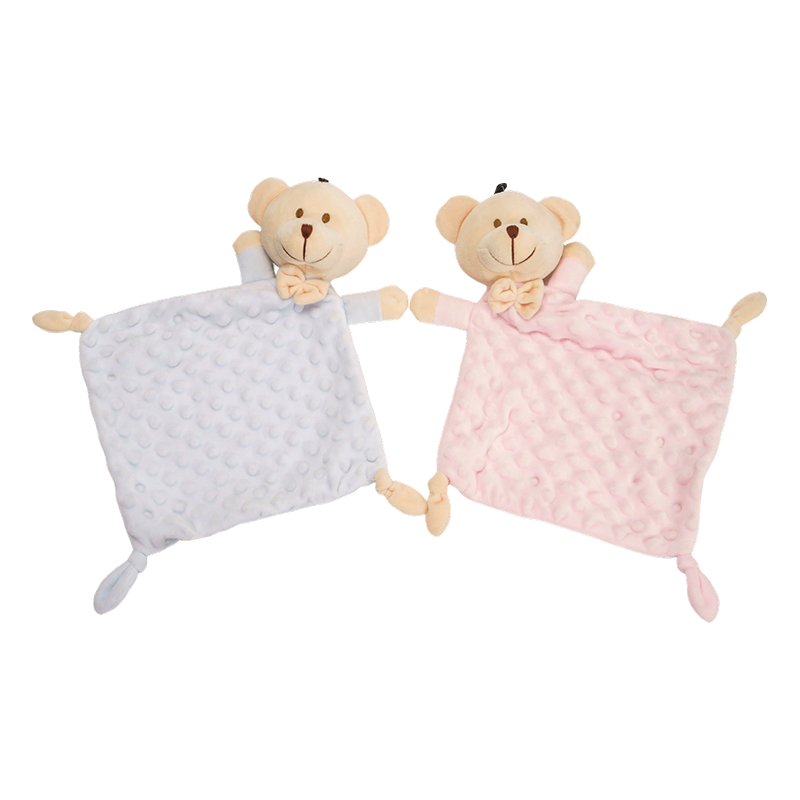 Soft Baby Soothing Blanket with Animal Head for Calming SleepThis baby soothing blanket pairs a gentle pink-gray animal head with soft, skin-friendly fabric, offering comforting weight for toddlers in nurseries or car seats. Its chewable, graspable design helps little ones settle, with established safety testing for peace of mind.View Product →
Weighted animals versus weighted blankets
Shoppers often ask whether a weighted stuffed animal is simply a heavy blanket in disguise. The mechanism is the same, but the application differs. A blanket spreads pressure across the entire body, which some people find restrictive or overly warm. A weighted animal concentrates pressure on a specific area, making it easier to use during the day, on an airplane, or in a classroom without drawing attention.
For children, the animal form is also less intimidating than a large blanket. A child who refuses a weighted lap pad will often happily hold a 2 kg penguin. Because the pressure is localized, users can adjust it simply by moving the animal from their lap to their shoulders or chest. For adults, the same portability makes a weighted animal practical in an office or a hotel room, where setting up a full blanket is not realistic.
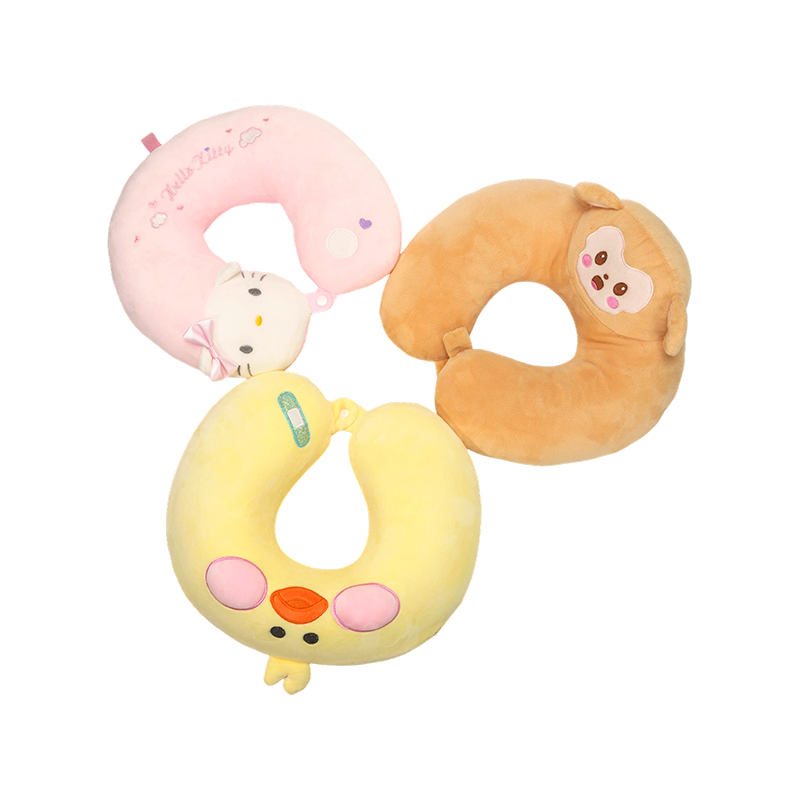 Weighted Animal U-Shaped Neck Pillow for Travel and RelaxationThis adorable U-shaped pillow with playful animal designs adds gentle weight for pressure relief while supporting the neck during travel. Its plush, resilient filling conforms to neck curves, making it a versatile companion for planes, cars, or office use.View Product →
A U-shaped plush neck pillow with added weight combines the pressure benefit with travel support. It can be used on a plane or in a car, and then repositioned over the chest once the traveler reaches the hotel. This dual function is one reason weighted travel pillows have become a popular private-label item for retailers looking to differentiate their travel accessories section.
What buyers should check when sourcing weighted plush
For retailers and importers, the benefits story creates demand, but quality determines whether customers return or request refunds. Pay attention to fill migration, fabric pilling, and seam strength. Ask the factory how they control weight consistency: a reputable manufacturer will give you a tolerance range, such as plus or minus 3 percent, so that every unit from the same production run feels identical.
Customization is another practical factor. Some retailers sell the same animal design in two weight variants, which requires a production line that can adjust filling without changing the exterior pattern. That is the kind of flexibility we offer at our own factory, where our complete range of stuffed animals can be manufactured with weighted filling to hit your target price point and safety requirements. When the fill weight is documented, the safety standards are current, and the seams are built for repeated use, a weighted stuffed animal earns its place on your shelf.